
Quick answer: There are three practical land crossings from Uzbekistan into Turkmenistan: Alat to Farap near Bukhara, Shavat to Dashoguz near Khiva, and Khodjeyli to Kunya-Urgench near Nukus. Since 1 October 2026 tourists need an e-visa sponsored by a Turkmen tour agency, and the crossing you use must match your paperwork. Posts usually open in the daytime only, and Khodjeyli may be exit-only, so check before you plan.
Last updated: October 30, 2026
Cover photo: The Turkmen side of the Farap crossing on the Uzbekistan border. Popo le Chien / Wikimedia Commons (CC BY 3.0).
The walk across no man's land between Uzbekistan and Turkmenistan is short, but it feels longer. You leave the Uzbek post with your bags, cross a strip of empty ground under a wide desert sky, and arrive at a Turkmen building where an officer opens your passport and looks up your e-visa. Somewhere on the far side your guide is waiting with a sign.
For many travellers this is how a Turkmenistan trip begins. Flights into Ashgabat are limited, and Bukhara and Khiva are so close that a land crossing is the natural way to link the two countries on one Silk Road trip. This guide covers the three crossings tourists use, how the e-visa changes things, and what the day itself looks like.
The e-visa rules since 1 October 2026
Turkmenistan introduced a tourist e-visa on 1 October 2026. It replaces the old system of a letter of invitation followed by a visa issued at the border. A licensed Turkmen tour agency files the application on your behalf, since the portal's sign-up for individual travellers still isn't open to the public. The e-visa can be printed or shown on your phone.
Your e-visa and itinerary name the border posts you'll use to enter and leave, and you need to stick to them. If you want to arrive at Farap and leave through Dashoguz, that has to be in the plan before the application goes in.
The system is new, and reports in October 2026 still differ on some details, including how quickly applications are processed and whether invitation letters are still involved in some cases. The official portal and your tour agency are the final word. Our visa requirements page and Turkmenistan visa guide are kept up to date as things settle.
A few rules apply at every crossing. There's a migration fee to pay on arrival, and you should carry clean, recent US dollar notes for it. Visitors staying more than three working days must be registered, which your tour agency normally handles. Borders can occasionally close at short notice, so keep your plans flexible on crossing day.
Alat to Farap: the Bukhara crossing
This is the busiest crossing for travellers and the one to choose if you're coming from Bukhara. The Uzbek post at Alat is about 100 km southwest of the city, and the Turkmen post is at Farap, on the road to Turkmenabat.

The Kalyan Minaret in Bukhara, the nearest big city to the Alat crossing. Photo: 26D / Wikimedia Commons (CC BY-SA 4.0).
Recent traveller reports put opening hours at roughly 08:30 to 18:00, with a lunch break in the middle of the day, although some Uzbek sources list the post as open around the clock. Aim to arrive in the morning. The gap between the two posts is around 1.5 to 2 km, and you may walk it or ride a shuttle minivan.
Once you're through, Turkmenabat on the Amu Darya is about an hour's drive away. Most tours continue from there to Merv and Mary, then west toward Ashgabat and the desert.

Sunset over the Amu Darya in Turkmenistan. Photo: joepyrek / Wikimedia Commons (CC BY-SA 2.0).
Our 5-day Classic III tour and 7-day Adventure tour both use Farap, as does the itinerary in our 5 days in Turkmenistan guide.

Neutral Turkmenistan Avenue in central Turkmenabat. Photo: Eldar Yagmurov / Wikimedia Commons (CC0).
Shavat to Dashoguz: the Khiva crossing
If you're coming from Khiva or Urgench, this is the shortest route in. The Uzbek post at Shavat is roughly an hour's drive from Khiva, and the Turkmen post sits about 10 to 12 km outside Dashoguz city.

Ota Darvaza, the west gate of Itchan Kala in Khiva. Photo: Petar Milošević / Wikimedia Commons (CC BY-SA 4.0).
Hours are usually 09:00 to 18:00. A shuttle runs across the neutral zone, and walking it isn't normally allowed. From the Turkmen side, Dashoguz is around half an hour away, with a bazaar that's worth a morning. Our Dashoguz travel guide covers the city.
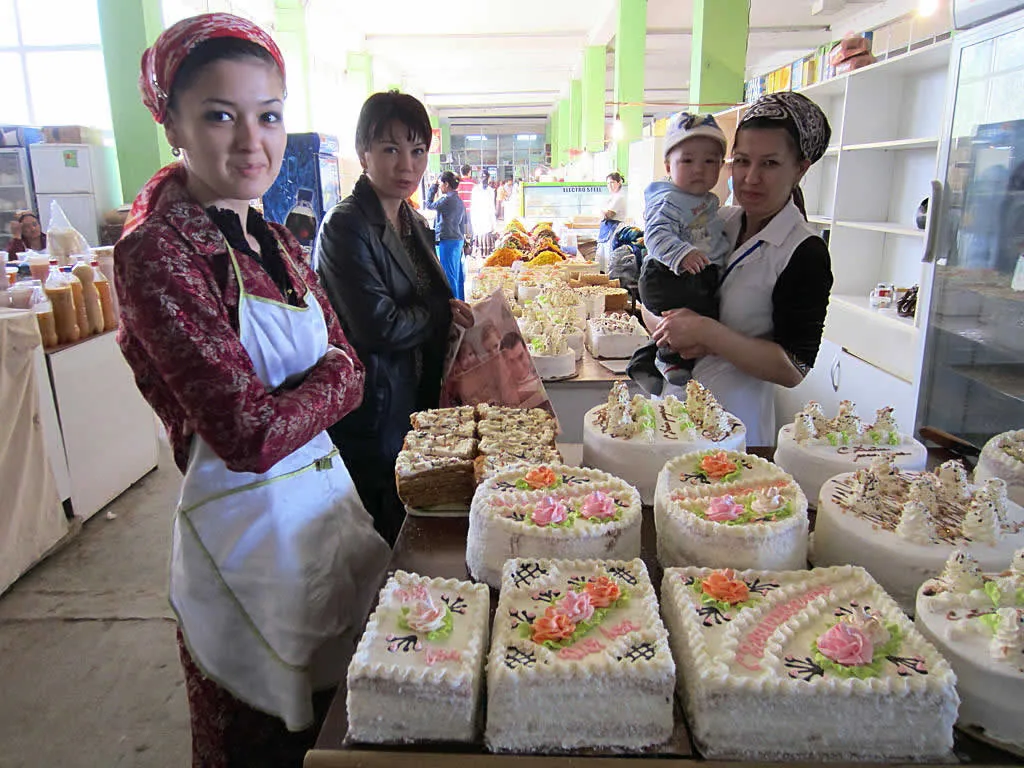
Cake sellers at the Bai Bazaar in Dashoguz. Photo: David Stanley / Wikimedia Commons (CC BY 2.0).
From Dashoguz you can reach Kunya-Urgench, about 100 km to the west, or head south across the Karakum to Darvaza. Our 2-day Classic tour enters and leaves at Shavat, which makes it a good add-on to a Khiva trip.
Khodjeyli to Kunya-Urgench: the Nukus crossing
The northern crossing links Khodjeyli, about half an hour from Nukus in Karakalpakstan, with Kunya-Urgench on the Turkmen side. It puts you right next to the UNESCO-listed monuments of Kunya-Urgench, including the Kutlug Timur Minaret and the Il Arslan Mausoleum.

The Il Arslan Mausoleum at Kunya-Urgench, with its conical tiled dome. Photo: Hans Birger Nilsen / Wikimedia Commons (CC BY-SA 2.0).
This is the crossing to check most carefully. Several recent sources describe it as exit-only, open to travellers leaving Turkmenistan for Uzbekistan but not for those coming in, while others list it as open both ways. Our 6-day Fantastic tour uses it as an exit. If you hope to enter here, ask your tour agency to confirm it's possible before your e-visa is filed.
Other crossings
There are a few more posts along the long Amu Darya border, but they're rarely used by tourists. The southern crossings are mainly for local traffic, and some are open to citizens of the two countries only. There are no cross-border passenger trains, so the crossings above, by road, are the practical options.
What crossing day looks like
On the Uzbek side you'll go through passport control and an exit customs check.
On the Turkmen side, expect a passport and e-visa check, the migration fee, and a customs check of your bags. Keep any medicines in their original packaging, with a copy of the prescription. Allow one to three hours for the whole crossing, more if a bus group arrives at the same time.
Your guide meets you once you're through, and the tour starts from there. Arrange the pickup time with your tour agency in advance, since you won't find taxis waiting at every post.
A few practical tips:
- Arrive early in the day so you're not caught by the lunch break or closing time.
- Carry enough water and snacks for a few hours of waiting.
- Don't photograph the border buildings or officials.
- Leave drones at home, and declare all the cash you're carrying.
- Bring printed copies of your e-visa and itinerary as a backup to your phone.
Frequently Asked Questions
Do I need a visa to cross from Uzbekistan into Turkmenistan?
Yes. Since 1 October 2026 tourists need an e-visa, applied for through a licensed Turkmen tour agency, and it lists the border posts you'll use.
Which border crossing is best?
It depends on where you're coming from. Alat to Farap suits travellers from Bukhara, and Shavat to Dashoguz suits travellers from Khiva or Urgench. Khodjeyli is closest to Nukus but may be exit-only.
How long does the crossing take?
Usually one to three hours, including both posts and the transfer across the neutral zone.
Are the borders open 24 hours?
Usually not. Plan on daytime hours, roughly 09:00 to 18:00, and confirm them with your tour agency before you travel.
Can I enter and leave by different crossings?
Yes, and many tours do. Enter at one post and leave at another, as long as both are listed in your e-visa paperwork.
Plan your crossing
Our tours start and finish at all the main crossings, and we'll match your e-visa paperwork to the posts you need. Get in touch with our team with your Uzbekistan dates and we'll plan the Turkmenistan part around them.