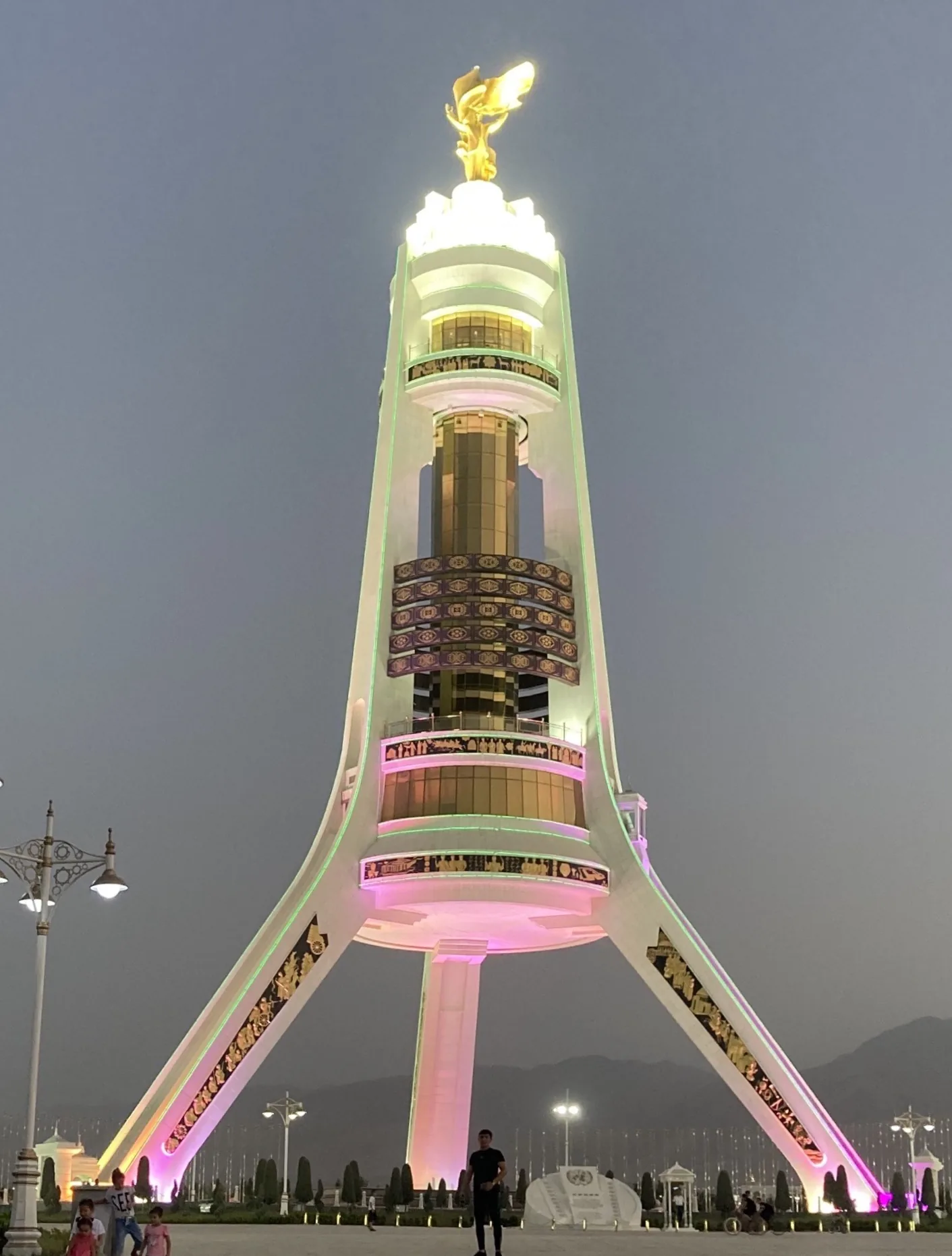
Quick answer: Five days is enough for Turkmenistan's three big sights. Spend day 1 in Ashgabat, day 2 at Nisa and then overnight by the Darvaza gas crater, day 3 back in Ashgabat, day 4 driving east to Merv by way of the Seyit Jemaladdin Mosque and Abiverd, and day 5 crossing to Uzbekistan at Farap. You'll need a tourist e-visa arranged through a licensed tour operator.
Last updated: October 22, 2026
Cover photo: The Arch of Neutrality in Ashgabat. Bayram A / Wikimedia Commons (CC BY-SA 4.0).
Most flights into Ashgabat land in the dark. On our 5-day Classic III tour, built around the Turkish Airlines arrival, guests reach the hotel in the small hours and are asleep before the city wakes up. By lunchtime they're looking at a white marble capital that doesn't resemble anywhere else in Central Asia. Two days later they're eating breakfast beside a crater that has been on fire for decades.
On a trip this short, geography sets the route: the capital in the south, the Karakum Desert to the north, and the Silk Road city of Merv four or five hours to the east. This itinerary follows that line and ends at the Uzbek border, which suits anyone continuing to Bukhara.
Before you go
Since 1 October 2026 tourists enter Turkmenistan on an e-visa, and the application is sponsored by a licensed tour agency, so you can't apply on your own. Your entry and exit points are part of that paperwork, which is why itineraries are planned around them. Our visa requirements page explains the process.
The best months are April to early June and September to October, when the desert night at Darvaza is comfortable. See our guide to the best time to visit Turkmenistan for the detail.
Day 1: arrive in Ashgabat
After a few hours' sleep and a late breakfast, the city tour starts after lunch. The first stop is usually the Arch of Neutrality, the tall three-legged monument that was taken down in the centre in 2010 and rebuilt on the southern edge of the city. Its viewing platform gives you the first proper look at Ashgabat's white avenues and the Kopet Dag mountains behind them.
From there it's a short drive to the Independence Monument and the National Museum, which is the best place in the country to see finds from Nisa and Merv before you visit the sites themselves. Dinner is in a local restaurant. Try a plate of palaw or some manty on your first night.
Day 2: Nisa and the Darvaza gas crater
The morning starts at the Russian Bazaar, which is good for dried fruit, bread and snacks for the drive. Then you head out of the city to Old Nisa, the Parthian fortress on the edge of the Kopet Dag foothills, listed by UNESCO in 2007. Its mud-brick walls and round halls are a good introduction to the ancient history you'll meet again at Merv. Our guide to Nisa covers what to look for.
On the way back through the western suburbs you'll pass the Turkmenbashy Spiritual Mosque and the monument "Ashgabat, the White City". After lunch the road heads north into the Karakum, about 285 km and four hours to Darvaza.
Before the main crater you'll stop at two smaller ones nearby, one filled with mud and one with water. They help you picture how all three were formed when the ground collapsed during gas exploration in Soviet times.
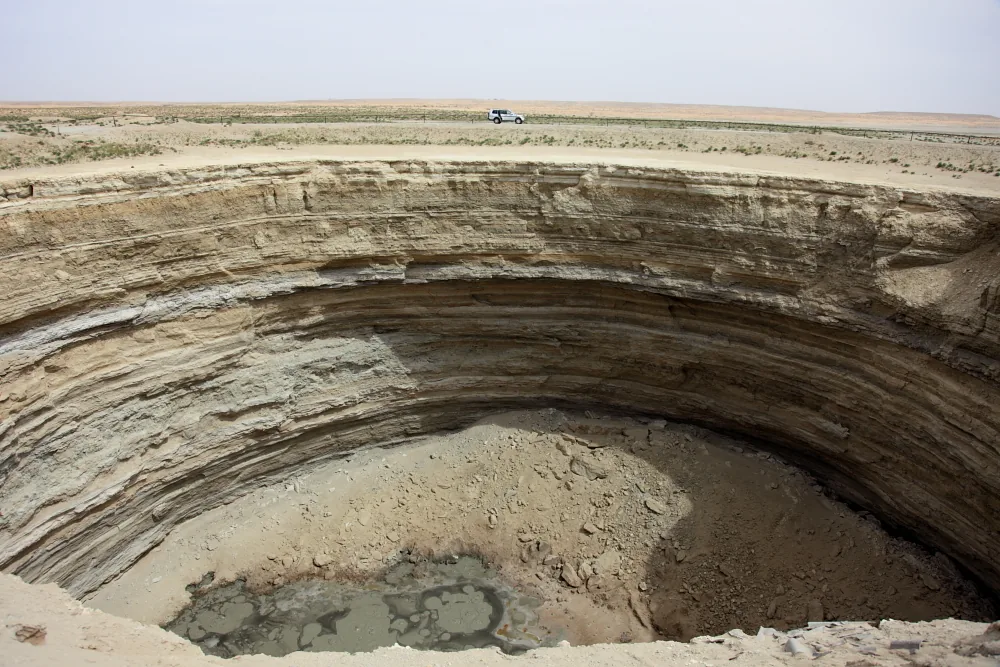
The mud crater near Darvaza, one of the stops on the way to the gas crater. Photo: flydime / Wikimedia Commons (CC BY 3.0).
You reach the Darvaza gas crater in the late afternoon. Walk around the rim in daylight, then again after dark, when the glow is much stronger and the heat reaches you from several metres back. Dinner is a barbecue in the open air, and you sleep in a traditional yurt at the camp.
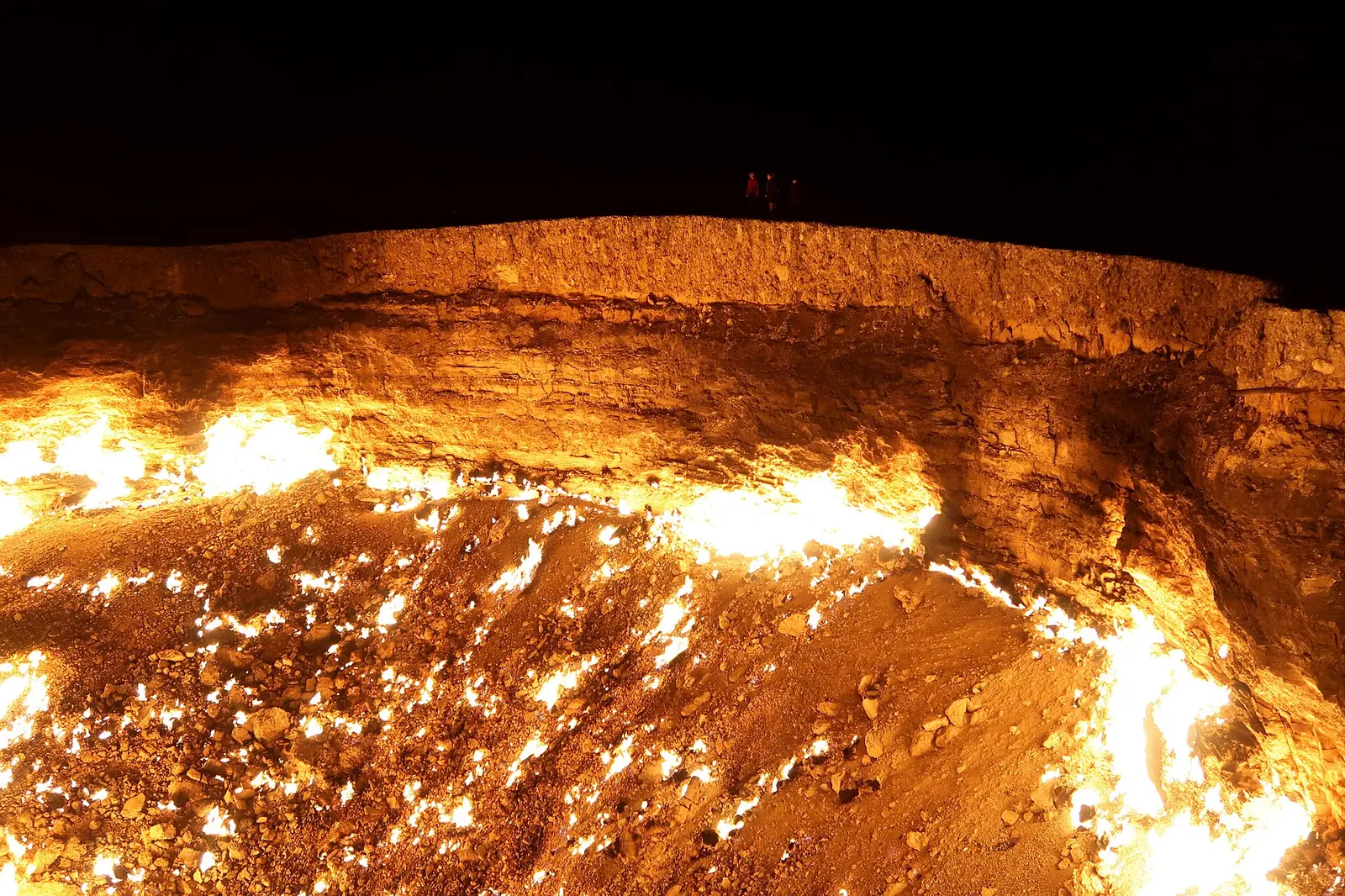
Flames on the wall of the Darvaza gas crater. Photo: John Pavelka from Austin, TX, USA / Wikimedia Commons (CC BY 2.0).
Day 3: back to Ashgabat
Get up early if you can, since the crater at dawn is quiet and the light over the dunes is soft. After breakfast at the camp it's the same four-hour drive back to the capital.
The afternoon covers the parts of Ashgabat you didn't see on day 1: Independence Square, the Wedding Palace, and the Alem Cultural and Entertainment Center, whose enclosed Ferris wheel was recognised by Guinness World Records as the world's tallest when it opened in 2012. If your legs are up to it, the Serdar Health Path climbs into the foothills above the city.
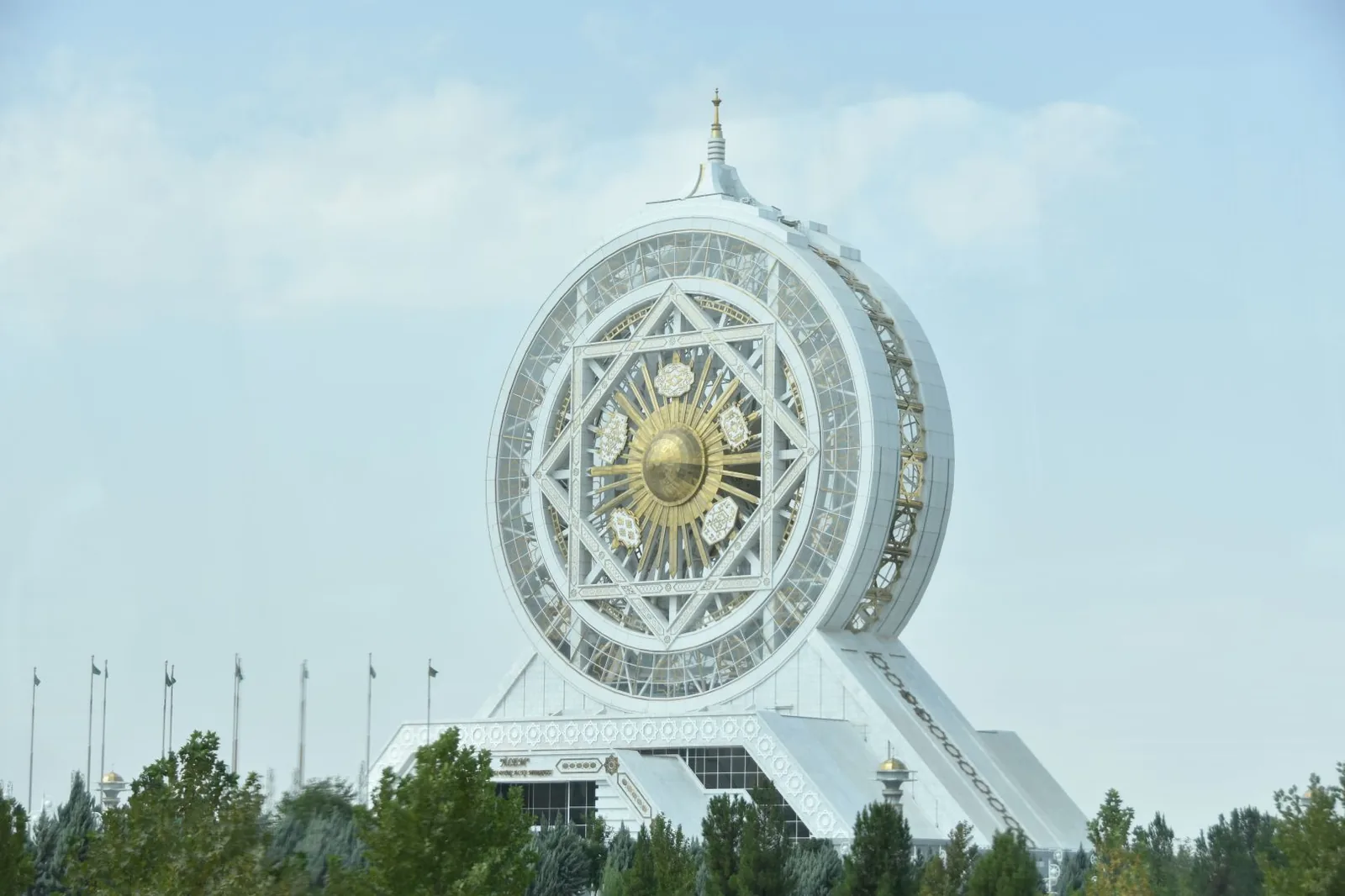
The Alem Cultural and Entertainment Center, home of an enclosed Ferris wheel, in Ashgabat. Photo: Ekki3 / Wikimedia Commons (CC BY-SA 4.0).
If you'd like more time in the capital, our 3-day Ashgabat itinerary has plenty of ideas.
Day 4: the road to Merv
This is the longest day. The drive from Ashgabat to Mary is about 350 km, roughly five hours, along the foot of the Kopet Dag.
The first stop is Anau, just outside Ashgabat, where the 15th-century Seyit Jemaladdin Mosque stood until the 1948 earthquake. What's left of its great portal still shows traces of the tilework that made it famous.
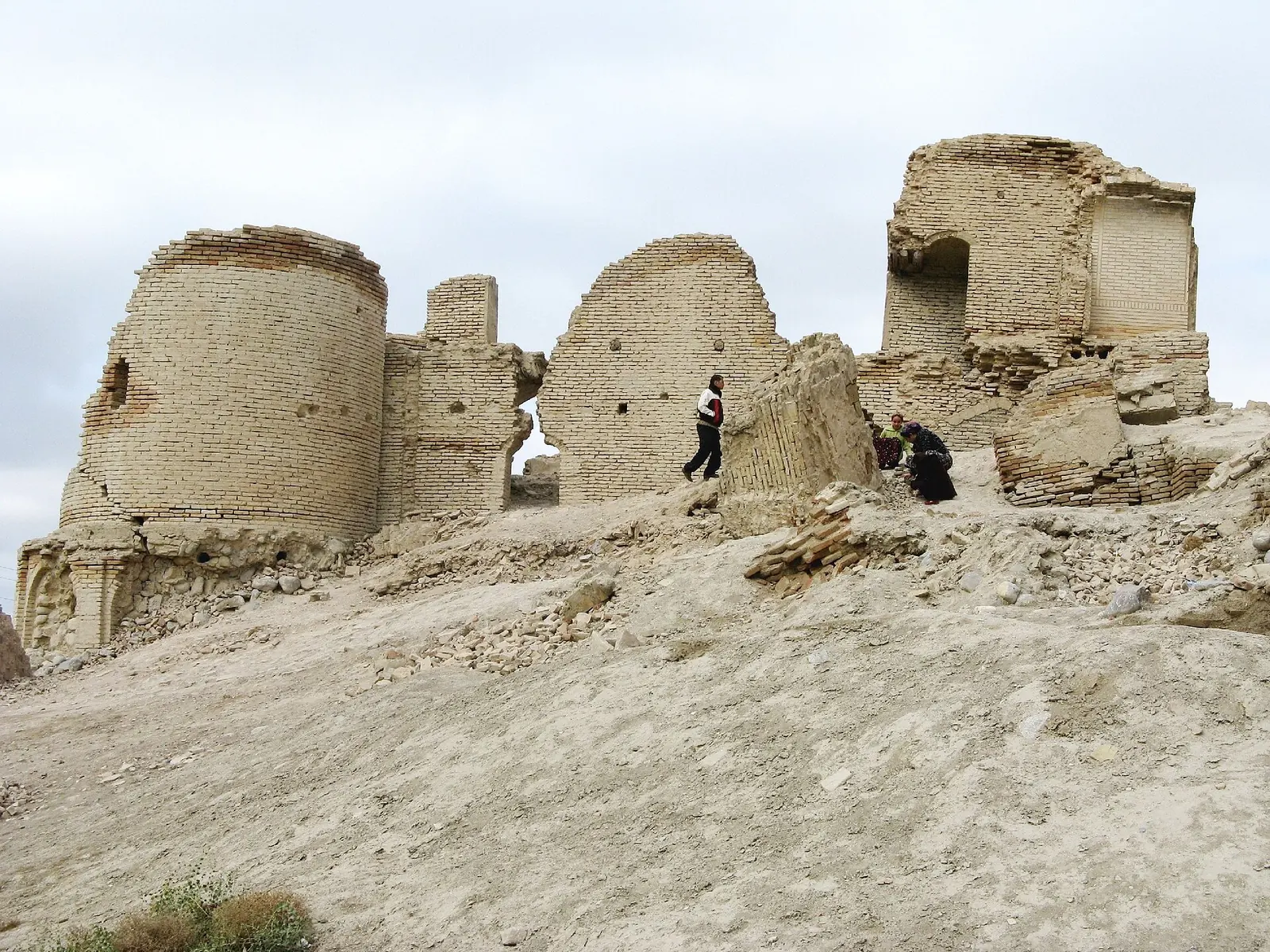
The ruins of the Seyit Jemaladdin Mosque at Anau, east of Ashgabat. Photo: Bayram A / Wikimedia Commons (CC BY-SA 4.0).
Further east, near Kaka, are the ruins of Abiverd, a medieval city whose mounds and walls rise out of the plain. Lunch is on the road, and the open country between the oases looks like this for long stretches.
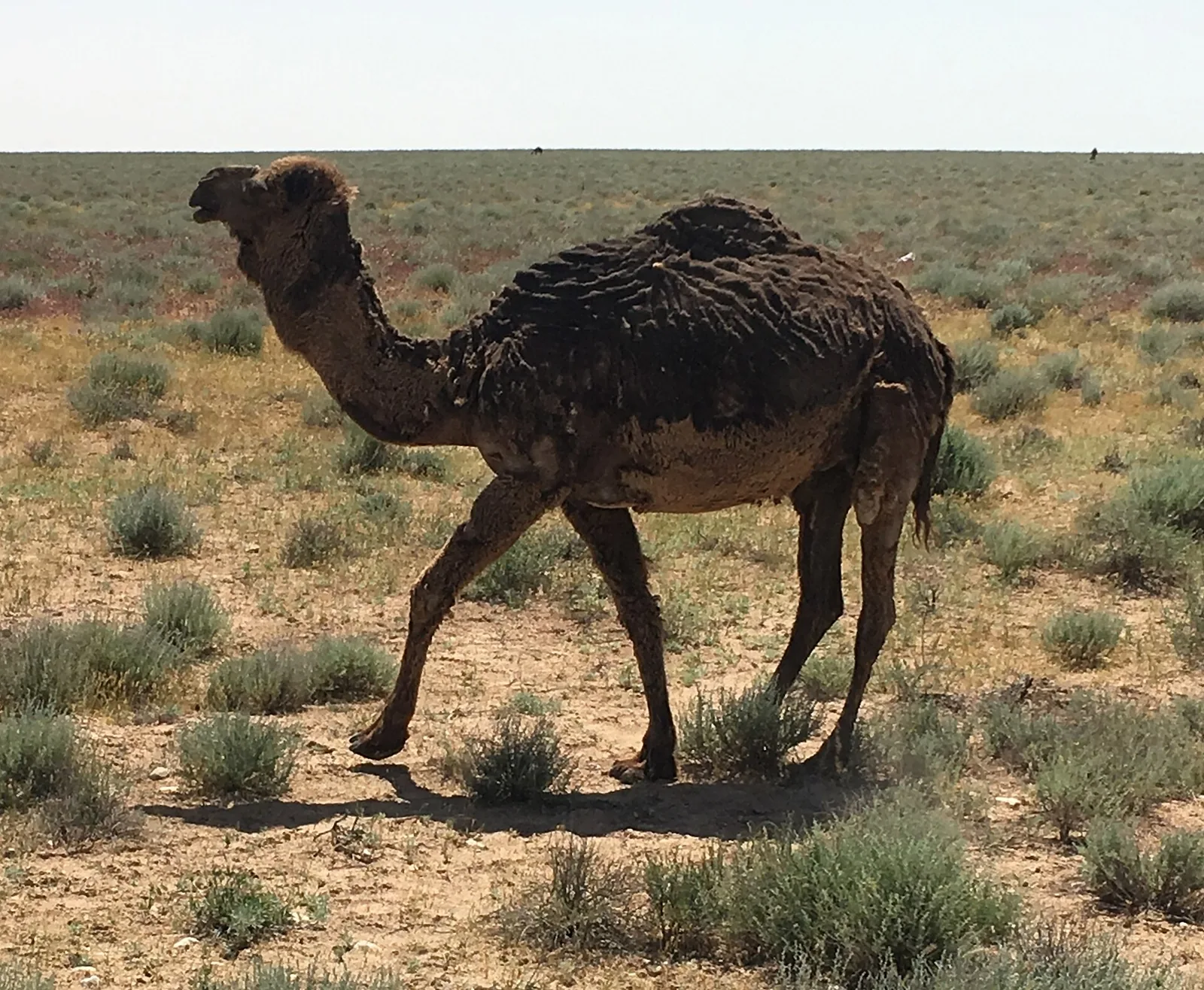
A camel near the M37 highway in the Karakum Desert, Ahal Province. Photo: Allan Mustard / Wikimedia Commons (CC BY-SA 4.0).
You arrive at Ancient Merv near Mary in the afternoon. Merv was one of the great cities of the Silk Road and has been a UNESCO World Heritage Site since 1999. Merv is really several cities, built side by side over about two thousand years. A full visit covers Erk Kala, the oldest walled city, dating to the 6th century BC; Gyaur Kala from the Hellenistic period; Sultan Kala with the 12th-century Mausoleum of Sultan Sanjar; and the mausoleums of Muhammad ibn Zayd and Yusuf Hamadani, along with the later fortresses of Abdullah Khan Kala and Bayramali Khan Kala.
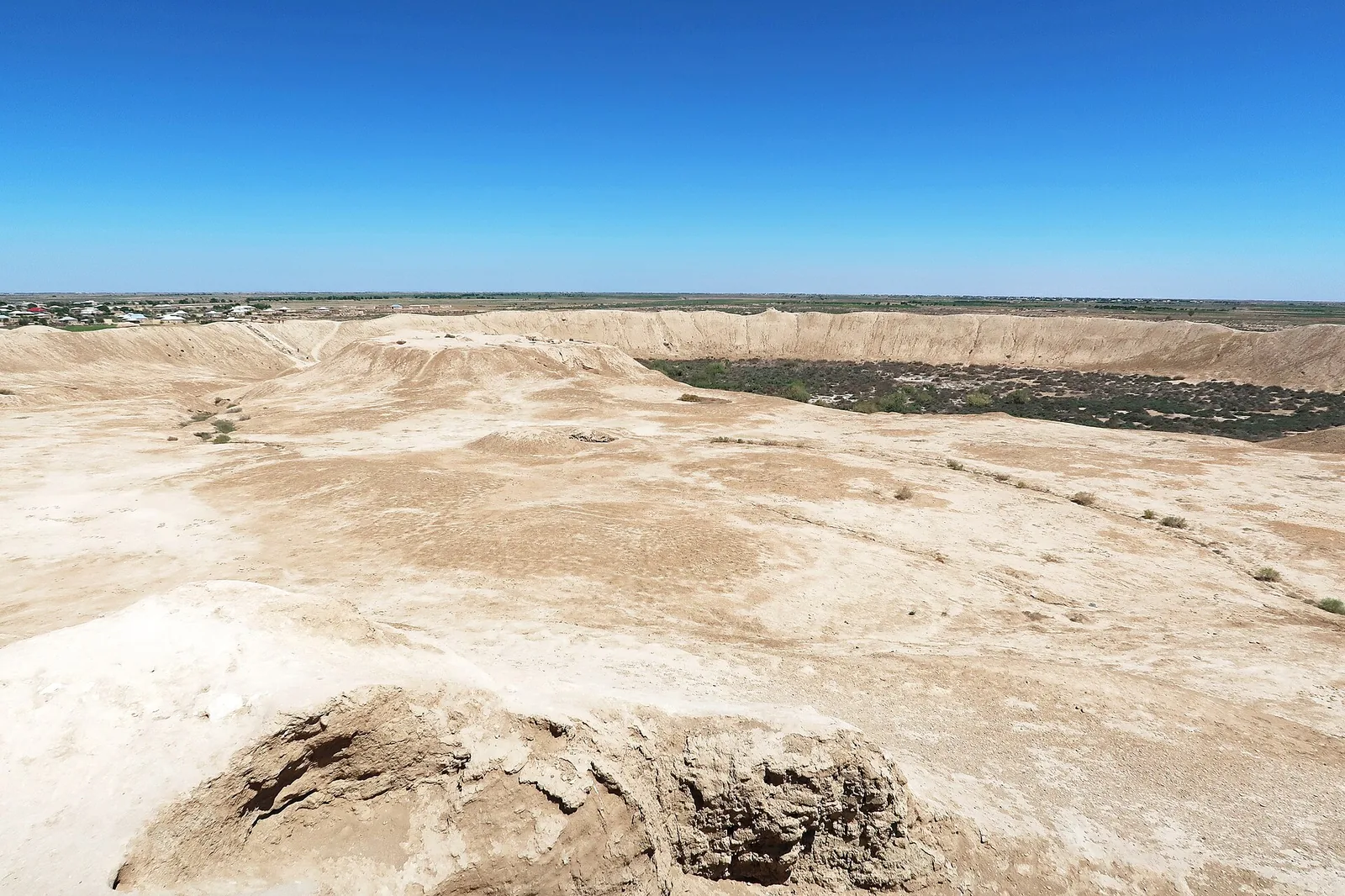
The walls of Erk Kala, the oldest city at Ancient Merv. Photo: John Pavelka from Austin, TX, USA / Wikimedia Commons (CC BY 2.0).
If time allows, the Mary Historical Museum is worth an hour for its finds from Merv and Gonur Depe. Our Merv guide and Mary city guide go into more depth. You'll spend the night in a hotel in Mary.
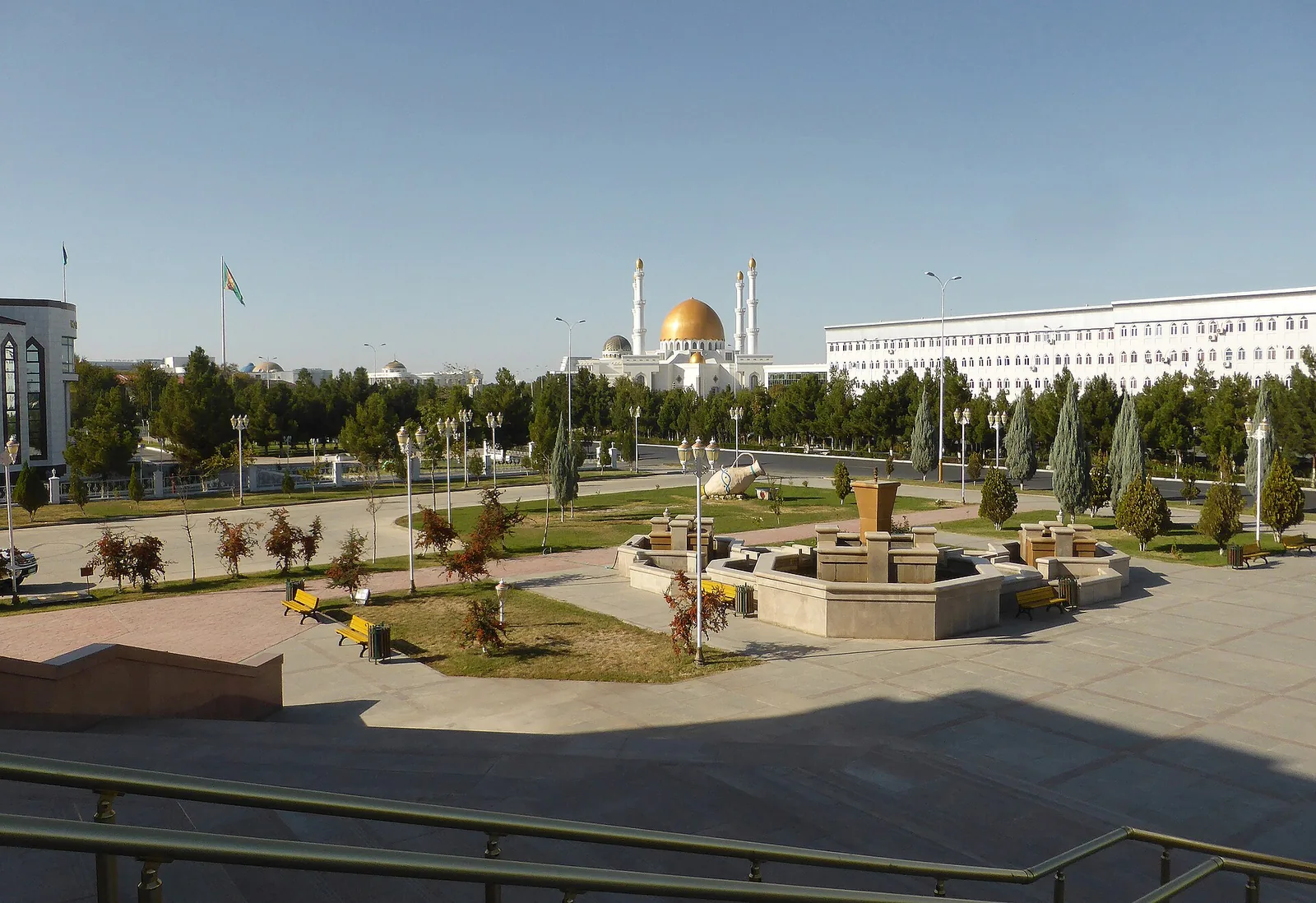
The city of Mary, with the Hajji Gurbanguly Mosque. Photo: Hans Birger Nilsen / Wikimedia Commons (CC BY 2.0).
Day 5: to the Uzbek border at Farap
After breakfast you drive northeast for about four hours, around 280 km, through the desert to Turkmenabat on the Amu Darya, and then on to the Farap border post. After customs on the Turkmen side, you cross to Alat in Uzbekistan, and Bukhara is the obvious next stop. Our guide to crossing between Uzbekistan and Turkmenistan by land explains what to expect at the border.
Other ways to spend five days
The same five days can run in different directions. The 5-day Classic I tour starts in the north at Kunya-Urgench, crosses the desert past Darvaza and leaves through Farap. The 5-day Classic II tour adds the mountain village of Nokhur and the Kow Ata underground lake, then crosses the desert to Dashoguz and leaves for Uzbekistan at Shavat. If you have a little longer, our 7-day itinerary adds Kunya-Urgench and Gonur Depe at a gentler pace.
Frequently Asked Questions
Is five days enough for Turkmenistan?
Yes, for the three highlights: Ashgabat, the Darvaza gas crater and Ancient Merv. You won't have time for Kunya-Urgench, Gonur Depe or the Caspian coast, which need a week or more.
Can I do this trip independently?
Not really. The tourist e-visa has to be sponsored by a licensed tour agency, and the trip is planned around your itinerary. In practice, five days like these are booked as a private or small-group tour with a driver and guide.
Where do you sleep at Darvaza?
At a yurt camp near the crater. Tours provide dinner and breakfast there, and you can walk to the rim after dark.
Can I start in Uzbekistan instead?
Yes. Reverse the route and enter at Farap from Bukhara, or start in the north at Kunya-Urgench as the Classic I tour does. Your e-visa lists the crossing you'll use, so decide before you apply.
How much driving is there?
Days 2 to 5 each include about four to five hours on the road. The roads are good and there are regular stops.
Plan your five days
The days above follow our 5-day Classic III tour, and we can change the order, start or border to suit your flights. Contact our team and tell us your dates and where you're travelling from, and we'll suggest the best version for you.